
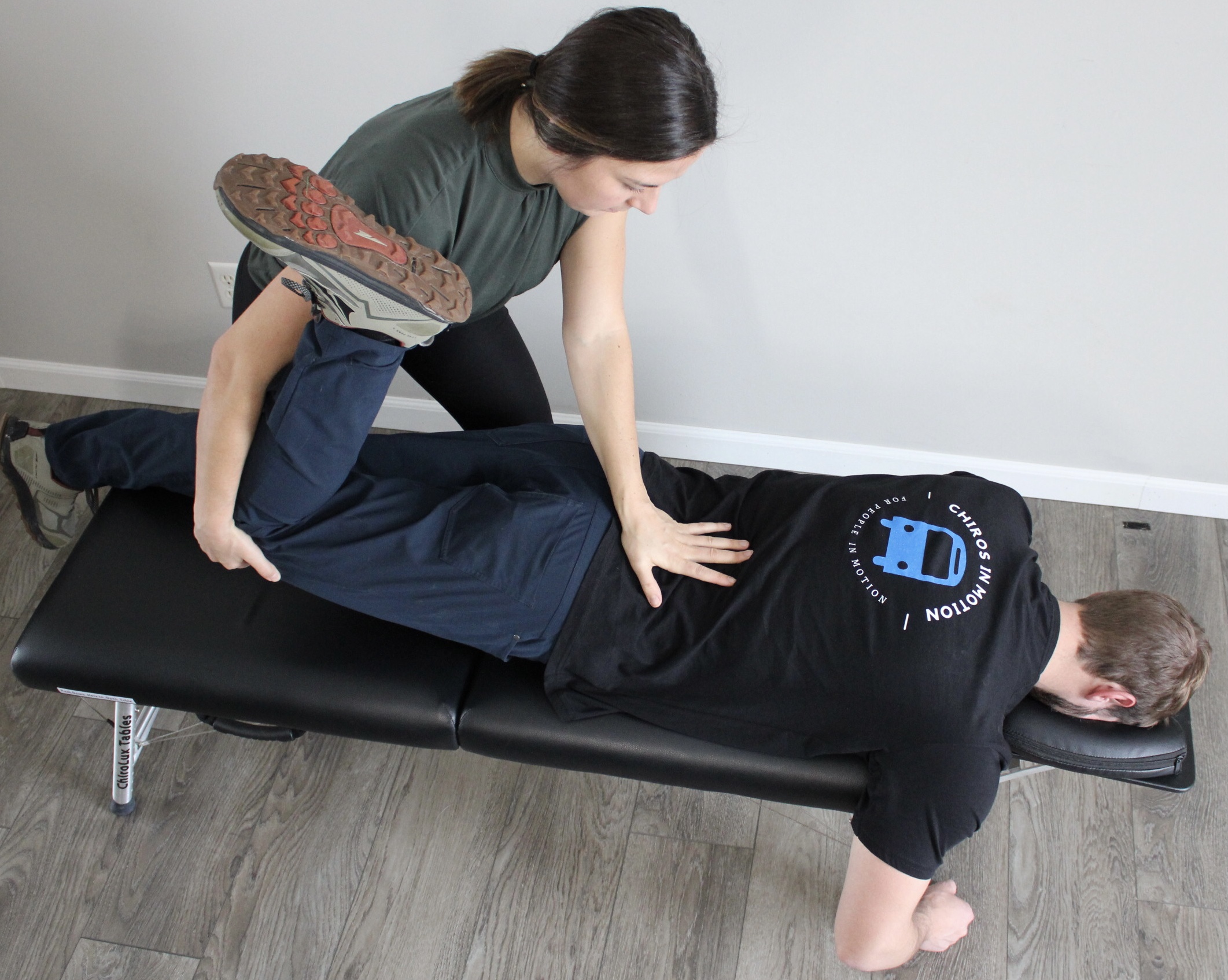

Patellofemoral pain syndrome, otherwise known as PFPS, is a condition caused by inflammation, irritation, or overuse of the patella tendon. The patella tendon attaches the patella to the tibia or head of the shin. PFPS may start from overuse or acute injury. Common symptoms include pain with jumping, walking up and down stairs, climbing, or squatting. If you have PFPS you may experience knee pain, swelling, or stiffness. Read below some common treatments for patellofemoral pain.

Treatment of PFPS
Reducing inflammation and activity modification are the two best ways to improve pain associated with patellofemoral pain syndrome. Chiros in Motion offers a variety of options to reduce inflammation including normatec compression sleeves and game-ready ice/compression. Activity modification is emphasized and bed rest is discouraged.
Our providers find pain-free movements that you can continue as you recover. We evaluate your movement patterns such as squat form, jump form, and walking – and determine whether any of your faulty patterns are contributing to your discomfort. We also evaluate the ankles and hips for any limitations or weaknesses. Often, the knee takes on more stress if the ankle and hip are limited or weak. Along with evaluating movement – therapeutic exercise and soft tissue work are very helpful to help resolve knee pain.